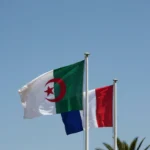

Algiers, December 24 – Algerian deputies have unanimously adopted a law that criminalizes French colonization (1830-1962) and demands official apologies from France. The legislation, passed on Wednesday, December 24, makes the French state legally responsible for its colonial past in Algeria and the tragedies it engendered. This development has been met with strong reactions from both sides, highlighting the enduring sensitivities surrounding this historical period.
Algerian Parliament Unanimously Adopts Landmark Law
Wearing scarves in the colors of the Algerian flag, parliamentarians rose and applauded the passage of the text. The law lists “crimes of French colonization” as imprescriptible, including “nuclear tests,” “extrajudicial executions,” widespread “physical and psychological torture,” and “systematic looting of wealth.” The law also stipulates that “full and fair compensation for all material and moral damages caused by French colonization is an inalienable right for the Algerian state and people.”
According to the text, the Algerian state must demand that France decontaminate the nuclear test sites. Between 1960 and 1966, France conducted 17 tests at several sites in the Algerian Sahara. The law also qualifies the “collaboration of the harkis” (Algerian auxiliaries of the French army) as “high treason” and provides for punishment for anyone who condones or justifies colonization.
This is not the first time such a law has been considered; it has been proposed repeatedly since the 1980s without success until now. The unanimous vote underscores the depth of feeling within Algeria regarding its colonial history.
France Expresses Regret Over “Hostile Initiative”
France has reacted negatively to the Algerian parliament’s decision. The French Ministry of Foreign Affairs described the law as “a manifestly hostile initiative, both to the desire to resume Franco-Algerian dialogue and to a serene work on memorial issues.” The Quai d’Orsay spokesperson emphasized that France does not “intend to comment on Algerian domestic politics” but could only deplore such an initiative. They highlighted “the extent of the work undertaken by the president” Emmanuel Macron regarding the memory of colonization through a mixed commission of French and Algerian historians.
The ministry added, “We continue to work on resuming a demanding dialogue with Algeria, which can meet the priority interests of France and the French, particularly concerning security and migratory issues.”
Historical Context and Ongoing Tensions
The question of French colonization in Algeria is a highly sensitive topic that remains one of the main sources of tension between the two countries. The conquest of Algeria, starting in 1830, was marked by mass killings, the destruction of its socio-economic structures, and large-scale deportations, according to historians. Numerous revolts were suppressed before a bloody war of independence (1954-1962), which, according to Algeria, resulted in 1.5 million Algerian deaths, while French historians estimate 500,000 deaths, including 400,000 Algerians.
In 2017, Emmanuel Macron, then a presidential candidate, referred to colonization as a “crime against humanity,” stating, “It is part of this past that we must face by also presenting our apologies to those against whom we committed these acts.” After the publication of a report by French historian Benjamin Stora in January 2021, the head of state committed to “symbolic acts” to try to reconcile the two countries, but this time excluding “apologies.” He later caused an uproar in Algeria by questioning, according to Le Monde newspaper, the existence of an Algerian nation before colonization.
This vote could further exacerbate tensions between the two countries, which have already been strained by France’s recognition in the summer of 2024 of an autonomy plan “under Moroccan sovereignty” for Western Sahara. Several incidents have since aggravated tensions, such as the conviction and incarceration of Franco-Algerian writer Boualem Sansal, who was eventually pardoned due to German intervention. French journalist Christophe Gleizes is currently serving a 7-year prison sentence after his appeal conviction in December.
Limited International Legal Impact, Significant Symbolic Rupture
While the law carries significant symbolic weight, its direct international legal impact on compensation claims may be limited. “Legally, this law has no international scope and therefore cannot oblige France,” commented Hosni Kitouni, a researcher in the history of the colonial period at the British University of Exeter. However, he noted that “it marks a moment of rupture in the memorial relationship with France.”
The Algerian government’s insistence on an official apology and full compensation continues to be a central point of contention, reflecting a deep-seated desire for recognition and justice for the historical grievances stemming from the colonial era.