
Yvelines, February 17, 2026 – The proposed New Paris-Normandy Line (LNPN) project, deemed of national interest, is undergoing a significant re-evaluation. Following strong opposition from elected officials, particularly in the Yvelines region, a new approach focusing on the rehabilitation of existing railway infrastructure is being considered. This potential shift in strategy was discussed at a transport meeting on Wednesday, February 4, 2026, in Bonnières-sur-Seine, Yvelines.
Rehabilitating Existing Tracks: A Preferred Solution
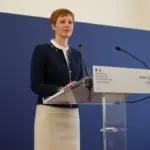
Gaëlle Le Roux, project director for the LNPN at SNCF Réseau, presented this alternative during the meeting. Gilles Lécole, Mayor of Aubergenville, expressed strong support for this option, stating, “It has been fifteen, perhaps even twenty years, that I have been saying this solution would be the best and most efficient for the LNPN.”
The proposed solution involves rehabilitating the existing rail lines between Mantes-la-Jolie and Évreux (Eure). Lécole suggests a configuration with “two tracks in each direction of travel.” He elaborated, “The tracks closest to the platforms would be used for trains traveling at an average of 40-60 km/h (e.g., Line J), and the inner tracks would be for semi-direct trains with an average speed of 160 km/h.”
A New Approach to Infrastructure Development
The project steering committee, which met on January 9, 2026, initiated this new approach. According to Gaëlle Le Roux, “The idea is to adapt existing infrastructure where technically possible and to build a new line in areas where it is not feasible.” She noted that the current network between Paris and Mantes-la-Jolie suffers from bottlenecks due to a limited number of tracks.
Le Roux emphasized that the reflection extends beyond 2030, aiming to “allow for the organization of two services (omnibus and semi-direct) by increasing the number of trains.”
Addressing Land Acquisition Concerns
One of the most contentious issues for Yvelines officials has been the acquisition of land for the new line. Gilles Lécole highlighted a major advantage of the proposed rehabilitation: “The main advantage is that much less land is used. I am satisfied for the farmers who will be able to continue to feed us, and it is a city dweller who says that.”
Gaëlle Le Roux committed to addressing these concerns promptly. “We have made a commitment to local authorities to quickly specify the routes in order to resolve the issue of land reserves. The study phase, which is now beginning, should extend until the steering committee meeting scheduled for the end of the year.” Departmental councilor Patrick Stefanini also welcomed this “formidable opening” at the February 4 meeting.
Robustness and Reliability for Travelers
Gilles Lécole believes that the method used to create a third track between Aubergenville and Mantes-la-Jolie could serve as a model. He explained, “We took a little from the gardens and redid the road.” He acknowledged that the section between Médan and Villennes-sur-Seine would be challenging due to a lack of available land, but suggested solutions like burying the line.
However, Gaëlle Le Roux cautioned that underground solutions, while more expensive, are “not a miracle solution.” She noted, “Even in this case, there is a need for shafts in case of evacuation.”
Lécole further argued that the two-track-in-each-direction solution would offer other benefits: “In the event of a breakdown, the switches prevent all traffic from being blocked. It is more robust and reliable for travelers.”
Freight Transport: Rail or River?
The redeveloped tracks could also accommodate freight trains. However, Lécole expressed skepticism regarding the projected increase in rail freight activity, citing past unfulfilled predictions for the Port of Le Havre. “Twenty-five years ago, we were already being told of an exponential increase in rail freight, but we have yet to see anything. It is rather river transport that will see an increase in traffic.”
Le Roux acknowledged the national imperative to “shift freight from roads” for ecological and industrial sovereignty reasons. She aims to analyze precise figures on container transit growth to “seek the right distribution” of freight flow. “The organization of rail freight on the three existing routes is the last answer to a more strategic question,” she stated. “First, there must be a political decision at the state level that specifies the objective of rail by 2030.”
Economic Considerations and Public Interest
The Mayor of Aubergenville suggested that SNCF Réseau might view the LNPN project primarily from an economic perspective, rather than considering the interests of travelers or local residents. “It’s a gold mine for them,” he asserted. “A new line would bring them work and billions of euros. Once the project is launched, if there are cost overruns, it will be the State, the Regions, or the Departments that will have to pay, even if the bill is twice as high as expected, as for the RER Eole.”
Gaëlle Le Roux refuted this viewpoint, stating, “The LNPN is a contribution to Île-de-France, Normandy, and travelers; it is also part of the industrial development of the Seine Valley.” She stressed the need to find a balance: “There is a balance to be found between the general interest and local projects or transport. There is no question of sacrificing a territory for a project of general interest.”
Le Roux concluded that “much pedagogy remains to be done” on the project, emphasizing the need to be “more concrete on the objectives and socio-economic benefits for the residents of Île-de-France.”
Source: https://actu.fr/societe/la-ligne-nouvelle-paris-normandie-empruntera-t-elle-un-autre-chemin-dans-les-yvelines_63854081.html