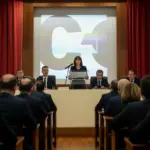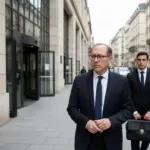

The decision by the Lyon municipal council on Thursday, April 23, to approve a staggering 400% increase in Mayor Grégory Doucet’s annual representation expenses has ignited a fierce debate, casting a shadow over the early days of his second term. This move, which sees the mayor’s annual allowance for expenses jump from €3,000 to €15,000, has been met with outrage from the opposition, led by Jean-Michel Aulas, who labels it as ‘outrageous and indecent.’
A Radical Increase or a Necessary Adjustment?
The approved deliberation means Mayor Doucet’s representation budget will now stand at €15,000 per year, potentially totaling €90,000 over a six-year term, or €105,000 if the mandate extends to seven years. This significant hike contrasts sharply with the previous allowance and raises questions about the justification for such a substantial increase, especially in a period of economic difficulty for many citizens.
The allocated funds are intended to cover a range of expenses, including ‘restaurant and reception costs up to €40 per person,’ ‘travel expenses not covered by a special mandate or external meetings where the mayor represents the City,’ and ‘communication and public relations costs.’ While these categories seem standard for a public official, the sheer scale of the increase has fueled public scrutiny.
During his previous term, Mayor Doucet’s expenses reportedly included new suits, dry cleaning, restaurant bills, hotel taxes in Paris, taxi fares, and even, surprisingly, the purchase of a poncho and overtrousers for cycling. This detailed breakdown, which only came to light after a citizen’s request to the Commission for Access to Administrative Documents (CADA), highlights a previous lack of spontaneous transparency, further intensifying the current debate.
The Social Dimension of Political Spending
Jean-Michel Aulas, leader of the main opposition group ‘Cœur Lyonnais,’ did not mince words in his condemnation. He emphasized that ‘the people of Lyon are dignified in economically difficult times. We owe this transparency to city agents who also travel, perform representation, and are not entitled to such financial largesse.’ The opposition proposed an amendment to increase the annual allowance from €3,000 to a more modest €3,500, which was rejected by the ruling Green majority.
Loic Terrenes, an opposition councilor, further criticized the decision on X (formerly Twitter), stating that ‘Grégory Doucet’s majority thus rejects sobriety, with a +400% increase, and transparency, by refusing to include a mandatory annual presentation of the details of expenses.’ This sentiment resonates with a public increasingly wary of political privilege and demanding greater accountability from their elected officials. The LFI group, also in opposition, abstained from the vote, indicating a nuanced but still critical stance.
Is the City Ready for Change?
Audrey Hénocque, the first deputy mayor, defended the increase, arguing that ‘€15,000 per year for a city of more than 500,000 inhabitants is very reasonable.’ She also clarified that this amount is a ceiling and may not be fully utilized. Hénocque suggested that the previous €3,000 allowance was insufficient, necessitating the current adjustment. Mayor Doucet added that certain train and plane expenses, previously not covered, would now fall under this new envelope.
However, this defense appears to contradict previous spending patterns. During his 2020-2026 mandate, Mayor Doucet reportedly spent only €4,081.71 out of a possible €18,000 from 2020 to 2025. This discrepancy raises questions about the actual need for such a substantial increase and whether it truly reflects current expenditure requirements or rather a desire for greater financial flexibility.
Lyon’s Decision in Contrast to Other Cities
Lyon’s decision stands in stark contrast to actions taken in other major French cities. In Paris, the new Socialist mayor, Emmanuel Grégoire, has opted to halve his representation expenses. Similarly, Eric Ciotti, the new mayor of Nice, has completely abolished the expenses previously used by his predecessor, Christian Estrosi. These examples highlight a growing trend towards fiscal prudence and transparency in local governance elsewhere, making Lyon’s move appear out of step with broader political currents.
The issue of transparency, a recurring theme, remains critical. During his first term, Mayor Doucet’s expense details were not spontaneously released, requiring a formal request to the CADA. While pressure led to greater transparency during an electoral campaign, the question remains whether the mayor will commit to annual, proactive disclosure of these new, significantly higher expenses.
Adding to the week’s controversies, a separate issue emerged at the Métropole, where the new LR President Véronique Sarselli approved a €700 monthly increase in her own allowances and the reinstatement of official cars, a decision criticized by the Greens, now in opposition at that level. This illustrates the complex and often contradictory nature of political spending across different administrative bodies.
Politics or Populism?
The controversy surrounding Mayor Doucet’s expense hike raises fundamental questions about the balance between the practical demands of public office and the imperative of fiscal responsibility and public trust. Is this a necessary adjustment to adequately fund the mayor’s representational duties for a major European city, or is it a misjudgment that risks alienating voters and fueling accusations of political indulgence?
The answer will likely unfold in the coming months as public reaction solidifies and the mayor’s office navigates the political fallout. The debate encapsulates a broader tension in modern urban governance: how to ensure effective leadership while maintaining transparency and demonstrating solidarity with citizens facing economic pressures. The people of Lyon will be watching closely to see if their mayor’s actions align with the principles of sobriety and accountability he espoused during his election campaigns.
Source: actu.fr