
Dog Dies in Miribel-Jonage Lake Near Lyon, Raising Cyanobacteria Concerns
Lyon, June 2, 2026 – The death of a dog on Sunday, May 31, 2026, after a swim in the Lac des Eaux-Bleues within the Grand Parc de Miribel-Jonage, near Lyon, has sparked significant concern and discussion on social media. The incident has led to an investigation by park authorities and water quality tests.
“People are worried, and that’s understandable; these are their pets. Our priority remains the safety of users, their families, and their animals, as well as clear, factual, and verified information,” stated park managers, while emphasizing the importance of user responsibility.
Suspicion of Cyanobacteria
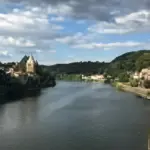
Following reports on social media and calls from users, the park teams promptly launched an investigation into the dog’s death. The incident occurred in the Presqu’île des Lézards, an area characterized by stagnant, slow-moving water and not a supervised swimming beach.
This has led to a “suspicion of cyanobacteria in the Lac des Eaux-Bleues of the Grand Parc Miribel-Jonage.” These bacteria, dangerous to human health and known to thrive in stagnant waters, are amplified by aquatic plants and warmer water temperatures. They are considered a potential cause of the animal’s death.
“We have not received any other reports of dog deaths, which makes it impossible to confirm whether the dog was infected here,” the park teams defended.
Reassuring Test Results for Supervised Areas
“We deplore the death of this animal and are taking all measures deemed useful by the ARS (Regional Health Agency),” said Segapal, the manager of Grand Parc de Miribel-Jonage, to actu Lyon. Segapal assured that they are “vigilant and very attentive to animal and human health,” but cautioned, “We cannot do more.”
The three public and supervised beaches at the park currently show “excellent water quality,” posing no risk to humans, according to the latest readings. New tests conducted by the ARS on Monday are expected in the coming days and will be published “in accordance with regulations at the four first-aid stations of the Grand Parc.”
Park managers reiterated that the park remains open and that “tests are carried out daily at the catchment wells. We have various alert points, measurement points, water analysis, and the ARS is very vigilant.”
Unsupervised Zones and Call for Caution
However, these tests, independently conducted by the ARS and reviewed by actu Lyon, are performed only in areas where swimming is authorized and supervised. “We have the means we implement and our obligations, and despite all that, things happen without us being able to do anything. We comply with the legislation and our obligations, but this animal swam in the banks of the Lac des Eaux-Bleues where swimming is ‘at your own risk’ because we cannot ensure surveillance there.”
The supervised beaches – Baraka, Morlet, Fontanil, and Atol’ plage (three free and one paid) – are prohibited for animals by prefectural decree, due to the site’s designation as a “drinking water reserve for Greater Lyon.” Segapal urged visitors to “be vigilant about where you swim your animal,” especially with a Cani-SwimRun event scheduled for June 13 and 14, 2026.
Woofest, the organizer of the canine event, also sought to reassure participants, stating, “To date, no problems have been reported in the affected area.” Both Woofest and Segapal confirmed that they would “keep you informed of any developments.”
Prudent Practices Recommended
“During heatwaves, dogs want to cool off, and it’s difficult for their owners to prevent them from doing so,” noted the park manager. The site shared good practices recommended by the ARS: “Be careful with stagnant water, do not swim in risky areas, and avoid water when you see the proliferation of deposits, cloudy water with colored deposits on the surface.”
In case of any suspected contact, it is crucial to rinse with clean water and prevent pets from swimming in stagnant water areas or consuming fish from the banks. For any symptoms, contact the Lyon poison control center at 04 72 11 69 11.