
Lyon, France – The city of Lyon is grappling with escalating tensions and violent confrontations between far-right and antifascist groups, a situation brought into sharp focus by the recent death of Quentin Deranque. This event has ignited a debate about whether Lyon has become the primary battleground for these ideological conflicts.
The Growing Presence of the Far-Right in Lyon
According to reports, Lyon has seen a significant entrenchment of various far-right factions, with an estimated 400 to 500 individuals actively involved across different movements. These groups, despite their varied ideologies, are increasingly collaborating and presenting a unified front. Alain Chevarin, author of “Lyon et ses extrêmes droites” (Lyon and its Far-Rights), notes, “They have increasingly decided to work together. It doesn’t mean they have exactly the same ideology, but believing that what unites them is stronger than what separates them, they do not hesitate to act together.”
Data from the news website Rue 89 indicates that the radical right in Lyon has been responsible for 102 attacks, aggressions, and hate crimes since 2010. In response to this surge in violence, the state has taken measures to dissolve several far-right associations, including Génération Identitaire, Les Remparts, and Lyon Populaire.
The Rise of Antifascist Movements and Their Role
In parallel, antifascist movements have also gained traction in Lyon. Among them is Jeune Garde, a group that was convicted on August 10, 2025, for violent actions and is now suspected of being linked to the death of Quentin Deranque. Jean-Yves Camus, a political scientist and co-director of the Observatory of Political Radicalities, explains the group’s philosophy: “Jeune Garde has always claimed a defensive antifascism. Defensive antifascism, what is it? It’s the idea of occupying the street, having the possibility, eventually, of resorting to violence, if the one opposite attacks. That’s the theoretical definition. In practice, it never works.”
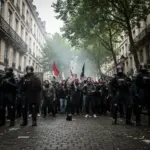
The simultaneous growth of both far-right and far-left extremist groups has created a volatile environment in Lyon, where tensions frequently erupt into confrontations. The city has become a microcosm of broader societal divisions, with the streets often serving as the stage for these ideological battles.
Quentin Deranque’s Death and its Aftermath
The death of Quentin Deranque has brought these underlying tensions to the forefront. While the full circumstances surrounding his death are still under investigation, it has undoubtedly fueled the animosity between the opposing factions. Éric Coquerel, a Member of Parliament for La France Insoumise, highlighted the long-standing issue of far-right violence in Lyon, stating on February 14, “I ask that we look at what has been happening in Lyon for many years: roundups, far-right actions, without it making much news.”
The incident has prompted calls for calm, including from President Emmanuel Macron, who urged for restraint during a march in tribute to Quentin Deranque. The ongoing investigation aims to shed light on the events leading to Deranque’s death and to address the underlying causes of the escalating violence.
The Broader Implications for Lyon
The situation in Lyon reflects a concerning trend of increasing polarization and radicalization within certain segments of society. The city’s history and its strategic location have made it a fertile ground for the establishment of various political groups, but the recent escalation in violence poses a significant challenge to public order and social cohesion.
Authorities are under pressure to address the root causes of these clashes and to ensure the safety of all citizens. The balance between upholding freedom of expression and preventing violence remains a delicate task in a city increasingly defined by its political fault lines.
The events in Lyon serve as a stark reminder of the complexities involved in managing political extremism and the profound impact it can have on urban communities.
Source: franceinfo.fr