
Building a tourism marketing playbook for 2027 means putting together a clear plan to market destinations, tours, activities, and services to travelers as the industry keeps changing. The goal is to know what future visitors will want, create great experiences, and earn strong reviews that lead to repeat visits and word-of-mouth recommendations. It’s a practical guide for staying relevant and growing in an industry that, based on Arival’s latest data, had the in-destination experiences sector alone worth about $270 billion in 2024.
As Nate Andrew, Managing Director at Blend, says, marketing is basically “what comes to mind when someone thinks about your brand or experience.” Your marketing channels shape that impression. Today, people leave bigger digital footprints than ever, and large language models (LLMs) keep getting smarter, so having a clear playbook helps your message stand out.
How Has Tourism Marketing Evolved in Recent Years?
Tourism marketing has changed a lot since the early 1900s, when the Michelin Guide encouraged drivers to explore beyond their towns. That guide was smart marketing from a tire company: more driving meant more worn tires. Today, the industry looks completely different.
The internet changed how places and experiences get promoted, moving from brochures and basic word-of-mouth to Google searches, online reviews, and social media creators — and now to AI assistants that answer trip questions directly, which calls for a different playbook: https://non.agency/en/blog/generative-engine-optimization-geo-a-complete-guide-to-ai-visibility/
This change is not just about new tools. It’s about how travelers discover, plan, and book. People may get inspired by a TikTok video, build a plan using blog posts, and book from their phone in minutes. The main challenge (and opportunity) is learning how to use this mix of channels to reach travelers in the moments that matter.
Key Digital and Offline Trends Shaping Tourism Marketing
Digital use has grown fast, but older methods still matter. On the digital side, short-form video on TikTok has grown quickly, especially with younger Millennial and Gen Z travelers who use it for trip ideas. Operators like Justin Buzzi of Get Up and Go Kayaking have used this style of content to reach millions of views and likes, showing how powerful vertical video can be.
- Google Things to do visibility and local search
- SEO basics and ongoing content work
- Social media planning and posting
- Influencer partnerships
- Email marketing
- Content marketing (guides, itineraries, FAQs)
Arival publishes many guides and articles that help experience operators work through this crowded digital space.
At the same time, offline marketing still plays a role. Many travelers book activities after they arrive, which creates strong chances for local promotion. Print ads, brochures, and partnerships with local businesses (including destination marketing organizations and visitor information centers) can put offers in front of people who are ready to choose something to do. Arival’s consumer research on the 2024 U.S. Experiences Traveler also found day tours are rising, with two in three travelers taking one in 2023, higher than pre-pandemic levels. That supports the idea that both online discovery and on-the-ground booking still matter.

Role of Technology and AI in Tourism Promotion
Technology, especially AI, has become a major part of tourism marketing, even though the big public attention spiked with ChatGPT in late 2022. Many travel companies used AI earlier in other forms, but generative AI made these tools easier for more teams to use without advanced technical skills.
AI can help in several practical ways:
- Personalize recommendations and content based on preferences and past behavior
- Create targeted content at scale (web pages, ads, social posts)
- Support faster marketing decisions by finding patterns in large datasets
- Forecast demand and predict traveler behavior more accurately
As Stacey Gregory, Content Director at Madden, said, “In today’s technical landscape, content has to appeal to people and to AI models.” That mindset helps protect visibility across search and new AI-led discovery. Arival also lists AI Resources for Experience Operators, showing how quickly these tools are becoming part of daily work.
What Are the Core Elements of an Effective Tourism Marketing Playbook?
A strong tourism marketing playbook is more than a list of actions. It’s a clear structure made of key building blocks that work together. These parts keep marketing consistent and focused, and they help you reach specific outcomes. For 2027, success starts with knowing your identity, knowing your audience, and setting clear goals that guide everything you do.
Defining Your Tourism Brand and Unique Selling Propositions
Every playbook starts with a clear brand and strong unique selling propositions (USPs). Your brand is not just your logo. It’s the identity people remember and the feeling they connect to your destination or experience. A consistent brand builds trust and helps people remember you, similar to how Las Vegas is linked to its famous slogan. Building a strong brand means having a clear mission and making sure your USPs show up in what you say and do.
Your USPs are what separate you from other options. Ask: what is truly special here? It could be nature, culture, hospitality, or a new kind of activity. These points need to match what your audience cares about. Strong storytelling and useful content, supported by a solid online presence, help people connect emotionally and move from “interested” to “ready to book.” VisitScotland, for example, focuses on real storytelling and uses unfiltered, real, and powerful content to reflect the country’s spirit and drive peer-to-peer influence.
Identifying and Prioritizing Target Markets
After you define your brand and USPs, the next step is identifying and prioritizing your target markets. This is not about trying to reach everyone. It’s about being precise. Picking a specific audience makes your offer more relevant, improves engagement, and increases the payoff from your marketing. This process includes market research, data analysis, competitor research, and clear customer profiles.
Google and social platforms give analytics that can show age ranges, interests, locations, and more. Looking at competitors can also reveal gaps they are missing. Prioritizing markets also means weighing:
- Market potential (size and spend)
- Connectivity (how easy it is to get there)
- Fit with your offer
- Expected net economic impact
VisitScotland shows this approach by focusing on key growth areas like North America, Europe, and the UK, while supporting emerging markets through intermediaries and airline partnerships.
Understanding Tourist Expectations and Behavior in 2027
Tourism marketing changes quickly because traveler tastes change quickly. A 2027 playbook should prepare you for what’s next, not just what’s happening now. By 2027, travelers will likely want even more personal experiences that match their values and interests. Arival’s research shows younger Millennial and Gen Z travelers are moving away from standard sightseeing tours and choosing things like food tours and immersive experiences. That means operators may need to build products that feel more hands-on and meaningful.
Meeting these needs leads to better satisfaction, stronger reviews, and repeat bookings. Personalization is now expected, not a bonus. Travelers want to feel understood, and they expect suggestions that fit them. Wellbeing is also a strong travel driver, so destinations that show how they support mind, body, and soul-using real content-can attract this market. A 2027 playbook needs enough flexibility to keep offers and messaging aligned with what travelers want.
Aligning Business Goals With Marketing Objectives
Your playbook only works if it supports the bigger business goals. A good marketing plan helps reach those goals and keeps marketing spend connected to what the organization is trying to achieve, like more visits, stronger brand awareness, or more economic impact for the region.
Start by setting clear company goals. Without them, marketing may look busy but won’t push the business forward. Use SMART goals (Specific, Measurable, Attainable, Relevant, Time-bound). Example:
| Goal type | Example |
| Business goal | Increase midweek hotel occupancy by 10% |
| Marketing objective | Gain 500 new email subscribers |
| Deadline | Launch a fall campaign by Q2 |
As Travel Alliance Partnership explains it: goals are where you want to go, strategies are the map, tactics are the vehicles, and KPIs are the road signs that show if you’re on track.
Step-by-Step Guide to Building Your Tourism Marketing Playbook for 2027
Building a tourism marketing playbook for 2027 works best when you follow a clear process: research, insights, strategy, execution, and measurement. The steps below help you turn information into actions that lead to visits and bookings, while keeping your plan flexible enough to adjust over time.
Conducting Deep Market and Competitor Research
Start with a strong research phase. This gives you the facts needed to make decisions based on data, not guesswork. Review visitor data such as:
- Who visits now, and who used to visit but hasn’t returned
- Your top markets by volume and spend
- Which seasons and products perform best
Arival runs tourism market research to help tour, activity, and attraction businesses do this kind of work.
Next, research competitors. List the destinations and brands going after the same audience. Review their positioning, messaging, and channel mix. Note what they do well and what feels weak or missing. Also gather input from partners, board members, and the local community to add context. Then look at broader trends like accessibility, workforce changes, traveler behavior shifts, and economic uncertainty. Finish with a SWOT analysis (Strengths, Weaknesses, Opportunities, Threats). A TAP tip is to set a deadline for research, write up the main insights, and move on, so you don’t get stuck in “research mode.”
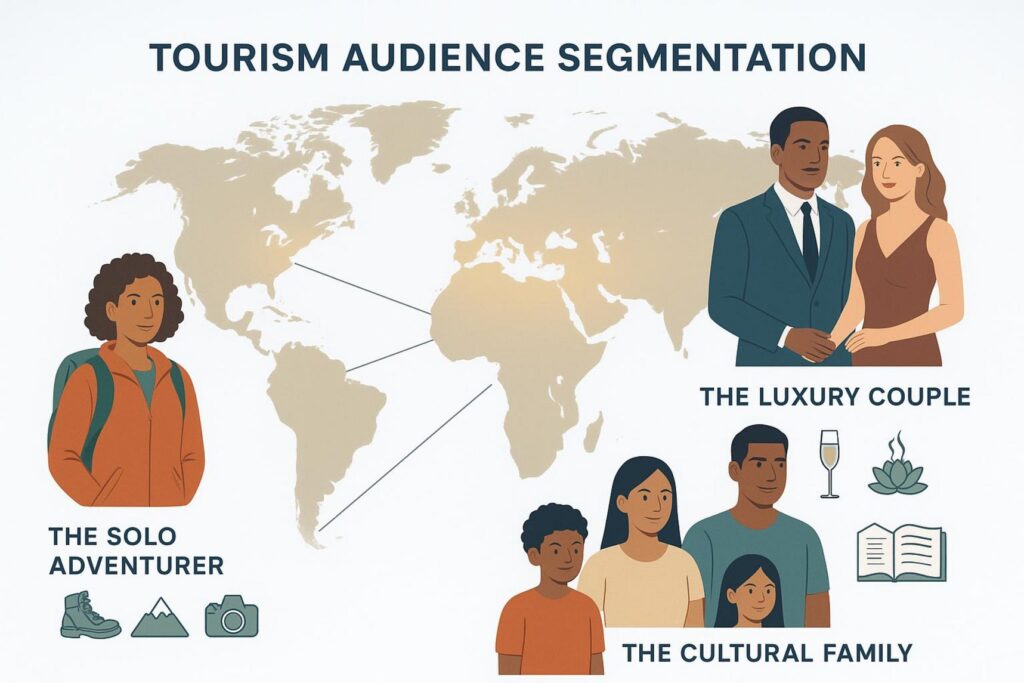
Data-Driven Profiling of Audience Segments
After research, build audience segment profiles based on data. You need to know who you’re speaking to and why they travel. Go past demographics and include motivations, interests, values, and lifestyle. Also review travel behavior:
- Solo vs. group
- Luxury vs. budget
- Culture-focused vs. relaxation-focused
- Booking windows and preferred platforms
Profiles (or simple personas) help you write more relevant messages and create experiences people actually want. Susan Baier of Audience Audit said on the Destination on the Left podcast that the most important part is moving from “who/what/where” to the “why.” That “why” is what makes marketing feel personal. For example, Madden Media’s Voyage Atlas data shows adventure travelers (over 117 million reachable people) want excitement and challenges, foodies want originality and indulgence, and families focus on safe, accessible fun.
Crafting Messaging and Storytelling for Destination Appeal
Once you know your audience, build clear messaging and storytelling. Your key messages connect what you want to say with what your audience wants to hear. They keep campaigns consistent across every touchpoint, from short captions to sales decks. A useful rule is to create 2-3 core messages for each target audience. Each message should:
- Match your brand and goals
- Focus on what matters most to that audience
- Be clear, short, and persuasive
- Build trust or push action
Real storytelling matters here. Skip clichés and use content that shows what the destination is actually like. That can include visitor stories, local voices, and the emotional impact of the experience. Add peer-led influence through user-generated content and creator support. VisitScotland centers its work on a “community of storytellers” (influencers, visitors, intermediaries) using a consistent message framework to build emotional connection.
Selecting Effective Marketing Channels: Online and Offline
Your 2027 playbook should use a mix of channels because travelers move between platforms. The PESO model helps organize this:
- Paid: social ads, digital campaigns, print ads, sponsored content
- Earned: PR, media coverage, influencer partnerships
- Shared: social media, UGC, partner networks
- Owned: website, blog, email newsletters
Your website is a key owned channel. It should support SEO, publish helpful content, load well on mobile, and make booking easy. Photos and videos should be strong, and pricing and listings should stay current. Digital is central, but offline still works for travelers who book after arrival.
Partnerships with DMOs and regional visitor groups can help get brochures and materials in front of those travelers. A strong playbook ties these channels together so your message shows up at each stage of the trip.
Building Community and Leveraging User-Generated Content
Travelers trust other travelers. That makes community and user-generated content (UGC) a strong part of modern tourism marketing. For example, adventure brands can build trust by showing real photos and stories from past guests.
Encourage happy customers to share reviews on TripAdvisor, Google, and social channels. Then respond to reviews-both good and bad-in a thoughtful way. This shows you take feedback seriously and helps future customers feel confident. Scotland is a good example again: it builds a broad storyteller community, including visitors, to share real experiences. This kind of peer-to-peer content helps a destination feel relatable and worth visiting.
Adopting Advanced Digital Tools and Artificial Intelligence
A 2027 playbook should include advanced digital tools and AI. Generative AI makes it easier to personalize experiences, create targeted content, and make faster choices. Keyword research tools also matter because they show the phrases travelers use when searching. That helps you write in a consistent brand voice that works for people and AI models. Google Keyword Planner is free, and paid tools can go deeper. SEO specialists can turn those findings into content plans and technical website updates.
That groundwork comes before anything aimed at AI answer engines. As Rad Paluszak from NON.agency puts it: “Before you think about GEO, get your SEO basics done first.” A site that loads slowly, buries its content, or has never had proper keyword work done won’t perform better simply because the optimization target has changed.
AI can also support hyper-targeted campaigns by identifying small audience groups and predicting behavior. For organizing content work, tools like Notion or Monday can help plan, assign, and track content from idea to publishing. These systems support workflows, schedules, and performance tracking so content stays consistent with your brand and goals.
Creating a Tactical Calendar and Assigning Responsibilities
The last step is turning your plan into a working schedule. Build a tactical calendar that shows what happens each month and who owns each task. Include promotions, events, big campaigns, and seasonal changes. Some work will be ongoing (social posting, email), and some will be seasonal. For example, an outdoor adventure company should update its website and Google My Business profile as seasons change.
Add enough detail to stay on track. For every tactic, define:
- Owner (who is responsible)
- Deadline and key milestones
- Tools, budget, and needed resources
Project management tools or simple checklists can keep execution moving. Accountability is what turns the plan into results. The playbook should be updated during the year as conditions change, but the calendar and responsibilities keep the work steady and organized.
Adapting to New Trends and Future-Proof Marketing Strategies
Tourism changes fast, so a playbook can’t stay frozen. If you want your marketing to hold up in 2027 and beyond, you need to build in room to adjust and try new things. That means tracking trends early, testing ideas, and updating your approach so your destination stays visible and appealing.
Personalization and Hyper-Targeted Campaigns
Personalization will keep getting more important. Travelers expect messages and offers that match their preferences, past actions, and even what’s happening in real time. Broad “one message for everyone” campaigns will perform worse. A strong playbook uses audience insights to run hyper-targeted campaigns based on motivations and booking behavior, not just age and location.
It also means adjusting messaging by region because what works in the U.S. may not work in Asia. DMOs often research international audiences and can help. Multilingual content and partnerships with international travel agencies can extend reach and make messaging more relevant.
Sustainable and Responsible Tourism Marketing
Sustainability is now a mainstream expectation and will shape tourism marketing by 2027. Many travelers, especially younger ones, care about environmental and social impact. Your playbook should reflect this by encouraging demand for responsible experiences and supporting year-round travel to spread visitors across seasons and regions.
Marketing should influence travelers early, when they are still deciding where to go, and guide them into better choices. Show your support for local communities, nature protection, and ethical operations through real stories. The TTRA Marketing Outlook Forum 2027 lists “Sustainability, accessibility, inclusion, and community alignment” as key session topics, showing how central this has become.

Video, Influencer, and Experiential Content Strategies
Visual content will keep leading. Short-form video on TikTok remains a major way younger Millennial and Gen Z travelers find inspiration. Using vertical, short videos helps you meet that audience on the platforms they use. Longer video, 360 tours, and interactive maps can also help people picture the experience more clearly.
Influencer marketing will keep shifting toward smaller creators (micro and nano influencers) with high trust and stronger community ties. Combine this with UGC for more authenticity. Also, as experiential travel grows (food tours, immersive culture, unique adventures), your content should highlight depth and participation, not just passive sightseeing. Show how your destination supports mind, body, and soul through real stories that feel human.
Managing Seasonal Fluctuations and Diversifying Audiences
Tourism often deals with seasonality and outside risks like storms or economic swings. A future-ready playbook needs plans for slower periods and ways to attract different kinds of travelers. For off-peak times, build seasonal promotions, adjust the offer (like pushing winter activities in a summer destination), and highlight what makes each season special. This might include off-season discounts, themed events, or tours tied to holidays and festivals.
Dynamic pricing (changing prices based on demand) can help increase revenue in peak periods and encourage bookings in quiet periods. Also work on audience diversity. If your destination relies on one type of visitor, find ways to appeal to others. Example: an adventure park with a minimum age of 8 could add options for families with younger children and reach a new group. This lowers risk and supports steadier demand year-round.
How to Measure and Optimize Tourism Marketing Success
A marketing playbook is not complete without measurement and ongoing improvement. This is the part where you prove what works, cut what doesn’t, and adjust quickly as the market shifts. Good decisions come from data, and the best results come from repeating what performs well and improving what falls short.
Establishing KPIs for Short-Term and Long-Term Impact
To track impact, set clear KPIs for both short-term and long-term results. Check performance regularly. Short-term KPIs can include campaign and channel results, partner conversions and ROI, and how many businesses become “trade-ready.” These show fast feedback and help you adjust active campaigns.
Long-term KPIs can include net economic impact, how many visitors were influenced to choose your destination, and total growth in visits and spend. Other useful KPIs include:
- Website traffic (overall and by page)
- Conversion rate (inquiry to booking)
- Social engagement (likes, shares, comments)
- Booking volume
- Reviews and ratings
Consistent tracking helps you adjust and keep your plan aligned with market shifts, as Travel Alliance Partnership points out.
Tools for Analytics, Monitoring, and Continuous Improvement
Marketers have many tools to track results and improve performance. Google Analytics shows website health, user behavior, and conversion paths. Social platforms include analytics for audience details and content performance. For offline campaigns like print ads, call tracking can connect phone leads and revenue back to specific efforts.
Project tools like Notion or Monday can also help you track your tactical calendar, deadlines, and ownership. Strong plans are responsive and flexible, which means testing, learning, and adjusting based on real performance data. You can review overall strategy quarterly, but track channel performance (social, website KPIs, SEO) more often — weekly or monthly — so you can react faster.
On the SEO side, it’s worth being careful about what you actually measure. As Rad Paluszak from NON.agency puts it: “Focus on the semantic frame around a topic, not keyword density.” Position tracking for a fixed list of phrases tells you less than whether your pages are gaining ground across a whole topic — which is the level search engines now work at.
Incorporating Feedback and Customer Reviews
Customer reviews and testimonials matter a lot in tourism because they act as social proof. Positive reviews build trust and reduce worries for new customers. Don’t just wait for reviews-ask for them on TripAdvisor, Google, and booking platforms. This helps build a strong online reputation, which supports long-term brand growth.
Also respond to reviews. Thank people for positive feedback and address negative reviews with care and clear next steps. This shows good service and a willingness to improve. You can also run voice-of-customer analysis by reviewing surveys, comments, complaints, and common questions. This can reveal what needs fixing and what should be highlighted more in your marketing.
Frequently Asked questions about Tourism Marketing Playbooks for 2027
As 2027 gets closer, tourism marketers often ask how to keep up with new trends, how often to update plans, and what mistakes to avoid. Here are clear answers to common questions that come up when building a playbook for the year ahead.
Which Marketing Tactics Will Be Most Effective in 2027?
In 2027, the best tactics will be personal, data-led, and connected across channels. Short-form video (especially TikTok-style content) should still perform strongly, along with immersive content that supports experiential travel. Influencer marketing will still work, but audiences will expect real partnerships and transparency. Generative AI will matter for personalizing experiences, producing targeted content at scale, and supporting decisions with predictive analytics. SEO will remain required for visibility, and content needs to work for both human intent and AI models. Finally, marketing that supports responsible and sustainable tourism will connect well with travelers who care about impact, and it can also support year-round travel and regional spread.
How Often Should You Update Your Tourism Marketing Playbook?
Your playbook should be treated like a living document. A full review and update usually makes sense once per year, but the tourism market changes too quickly to wait that long for every adjustment. Many teams review overall strategy every quarter so they can react to performance results and trend shifts. At the channel level, check and improve more often. Social performance, website KPIs, and SEO work often need weekly or monthly monitoring. Small, regular updates help prevent bigger problems later and keep your marketing aligned with current traveler behavior.
What Are Common Mistakes in Building a Tourism Marketing Strategy?
Common mistakes include setting marketing goals that don’t match business goals, skipping market and competitor research, and failing to understand what your audience actually cares about. Other problems include weak brand definition and unclear USPs, which makes your offer blend in with others. Some teams rely too much on one channel, while others spread efforts across many channels without tying them together (like the PESO model).
A major issue is not measuring and improving: without KPIs and regular tracking, campaigns can drift and underperform. Another frequent mistake is getting stuck in research and never turning insights into action, or not assigning owners to tasks, which can stop execution before it starts.









Leave a comment